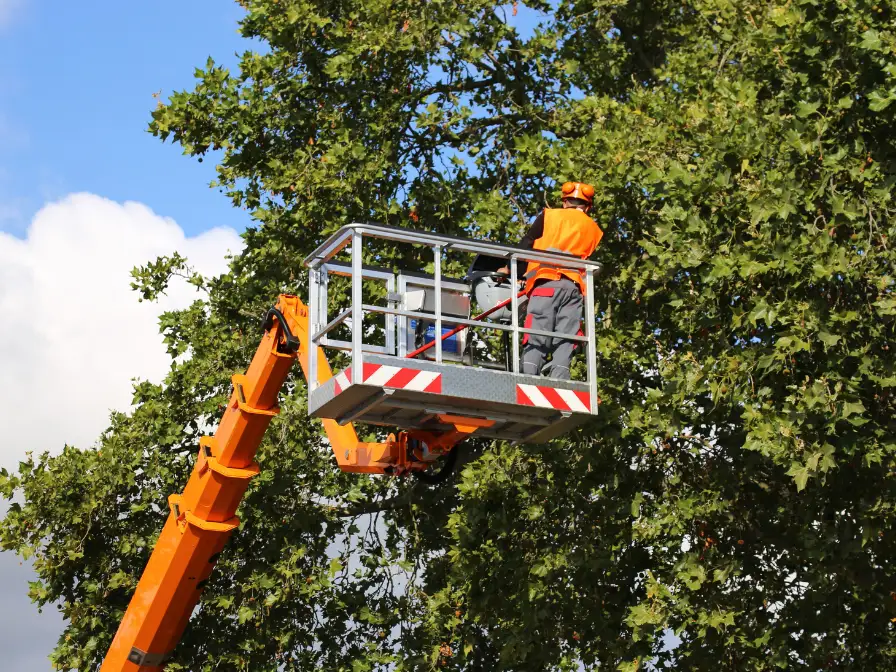
If you have lived in Florida for any length of time, you know that storm season is not something to take lightly. Between June and November, the Tampa Bay area and Central Florida can see everything from tropical storms to full Category hurricanes, and the damage they leave behind is not just about wind and rain. A significant portion of storm-related property damage comes from trees, whether that is a branch coming through a roof, a full tree uprooting onto a fence, or a limb taking out a power line.
The good news is that most tree-related storm damage is preventable. At Southern Environmental, we are a veteran-owned tree and land services company based in Plant City, FL, and helping homeowners get their trees storm-ready is one of the most important things we do. Here is what that actually looks like in practice.
Why your trees are one of your biggest storm risks
Most homeowners think about storm shutters, roof condition, and drainage when they prepare for hurricane season. Trees often get overlooked until something goes wrong. But the reality is that a poorly maintained tree can cause more damage to your home in a single storm than almost any other factor on your property.
Here is why trees become hazards during storms:
Dead and weak branches are the first to fail. When high winds hit, branches that are already dead, diseased, or poorly attached do not need much force to come down. These are the branches that end up on roofs, cars, and fences.
Overgrown canopies catch more wind. A dense, unpruned canopy acts like a sail in high winds. The more surface area the wind has to push against, the more stress is placed on the trunk and root system. Properly thinned trees let wind pass through more easily, which significantly reduces the risk of uprooting or structural failure.
Root problems are invisible until it is too late. A tree can look completely healthy from the outside while its root system is compromised by decay, soil compaction, or previous damage. These trees are at serious risk of uprooting in a storm, and there is no way to know without a professional assessment.
Trees near structures multiply the risk. A tree that falls in an open field is a nuisance. A tree that falls on your home, your neighbor’s home, or a power line is an emergency. Any tree within falling distance of a structure deserves regular professional attention.
What storm preparation actually looks like for your trees
Getting your trees ready for hurricane season is not a one-day job. It is an ongoing process that starts well before June and involves a few key steps:
Professional pruning before storm season. This is the single most impactful thing you can do. Removing dead, weak, and overgrown branches before the season starts reduces the risk of them coming down during a storm. It also improves the overall structure of the tree so it handles wind more efficiently. We recommend getting pruning done in late winter or early spring so your trees are in good shape well before the first storm threat of the season.
A structural assessment from a certified arborist. Pruning alone is not enough if a tree has underlying structural problems. Our arborists inspect each tree for cracks, cavities, co-dominant stems, root issues, and signs of disease or pest activity. If we find something that needs attention, we walk you through your options honestly and help you make the right call for your property.
Removing trees that are beyond saving. Sometimes the right answer is removal. A tree that is structurally compromised, severely diseased, or positioned too close to your home is a liability that will only get worse over time. Removing it proactively is always safer and less expensive than dealing with the aftermath of it coming down in a storm.
Signs your trees need attention before storm season
You do not need to be a certified arborist to spot some of the most common warning signs. Here is what to look for when you walk your property:
• Dead branches or large sections of the canopy that are not producing leaves
• Cracks or splits in the trunk or where major branches meet the trunk
• Fungal growth, mushrooms, or soft spots at the base of the tree
• A lean that has developed or increased over time
• Branches that overhang your roof, driveway, fence, or power lines
• Areas where the soil near the base appears to be heaving or shifting
• Trees that were damaged in a previous storm and never properly assessed
If you are seeing any of these signs, do not wait. The time to address them is before a storm is in the forecast, not after.
Emergency tree services when storms do hit
Even with the best preparation, storms are unpredictable and trees sometimes come down anyway. Southern Environmental provides emergency tree removal services for situations where a fallen or dangerously damaged tree needs to be handled right away.
If a tree has come down on your property after a storm, do not attempt to move or cut it yourself, especially if it is near power lines or resting against a structure. Call our team and we will get out to you as quickly as possible with the right equipment to remove it safely and clean up the area.
Serving Central Florida homeowners before and after the storm
Southern Environmental serves Plant City, Brandon, Dover, Seffner, Riverview, Valrico, Lithia, Lakeland, Bartow, Mulberry, Tampa, and the surrounding Tampa Bay area. We are licensed, insured, and led by ISA Certified Arborists who know the trees and weather patterns of this region well.
We give you upfront pricing before any work begins, show up when we say we will, and do not leave until the job is done right.
Frequently asked questions about storm damage prevention and tree care in Florida
When should I start preparing my trees for hurricane season?
The earlier the better. We recommend starting in late winter or early spring, which gives you plenty of time to schedule pruning, address any structural issues, and remove any trees that need to come down before the season begins. Waiting until May or June means you are competing with everyone else who waited, and availability gets tight fast.
How do I know if a tree is a storm hazard?
Look for dead branches, cracks in the trunk, leaning, fungal growth at the base, or soil that appears to be shifting near the roots. If a tree is within falling distance of your home or another structure, it deserves a professional assessment regardless of how healthy it looks. Our arborists can give you an honest evaluation and let you know if anything needs to be addressed.
Does homeowners insurance cover storm-related tree damage?
In many cases, yes, particularly if a tree falls and damages a structure on your property. Coverage varies by policy, so we recommend reviewing your policy and contacting your insurance provider after any storm event. Document all damage with photos before any cleanup begins, and our team can provide documentation to support your claim if needed.
What is the difference between storm preparation pruning and regular pruning?
The goals overlap significantly, but storm preparation pruning places extra emphasis on removing anything that could become a projectile or cause structural failure in high winds. That includes thinning the canopy to reduce wind resistance, removing co-dominant stems that are prone to splitting, and paying close attention to any branches that overhang structures. Our arborists approach every pre-storm pruning visit with that specific risk reduction mindset.
How quickly can you respond after a storm?
We do our best to respond as quickly as possible, and we prioritize situations where a tree is posing an immediate safety risk to people or structures. After a major storm event, demand for emergency tree services spikes significantly across the region. Calling us as soon as it is safe to assess your property gives you the best chance of getting a fast response.
Protect your property before the next storm season
Do not wait until a storm is in the forecast to think about your trees. The time to act is now, while you still have options and the weather is on your side.
Contact Southern Environmental today to schedule a storm preparation assessment or request a free estimate. Call us at 813-566-8733 or book online through our website. We are available Monday through Friday from 7:30am to 5pm and Saturday through Sunday from 8am to 5pm.
Your home is worth protecting. Let us help you do it right.